Colors and Symbols - A Bridge to Knowing One's Soul
Colors and Symbols – A Bridge to Knowing One’s Soul
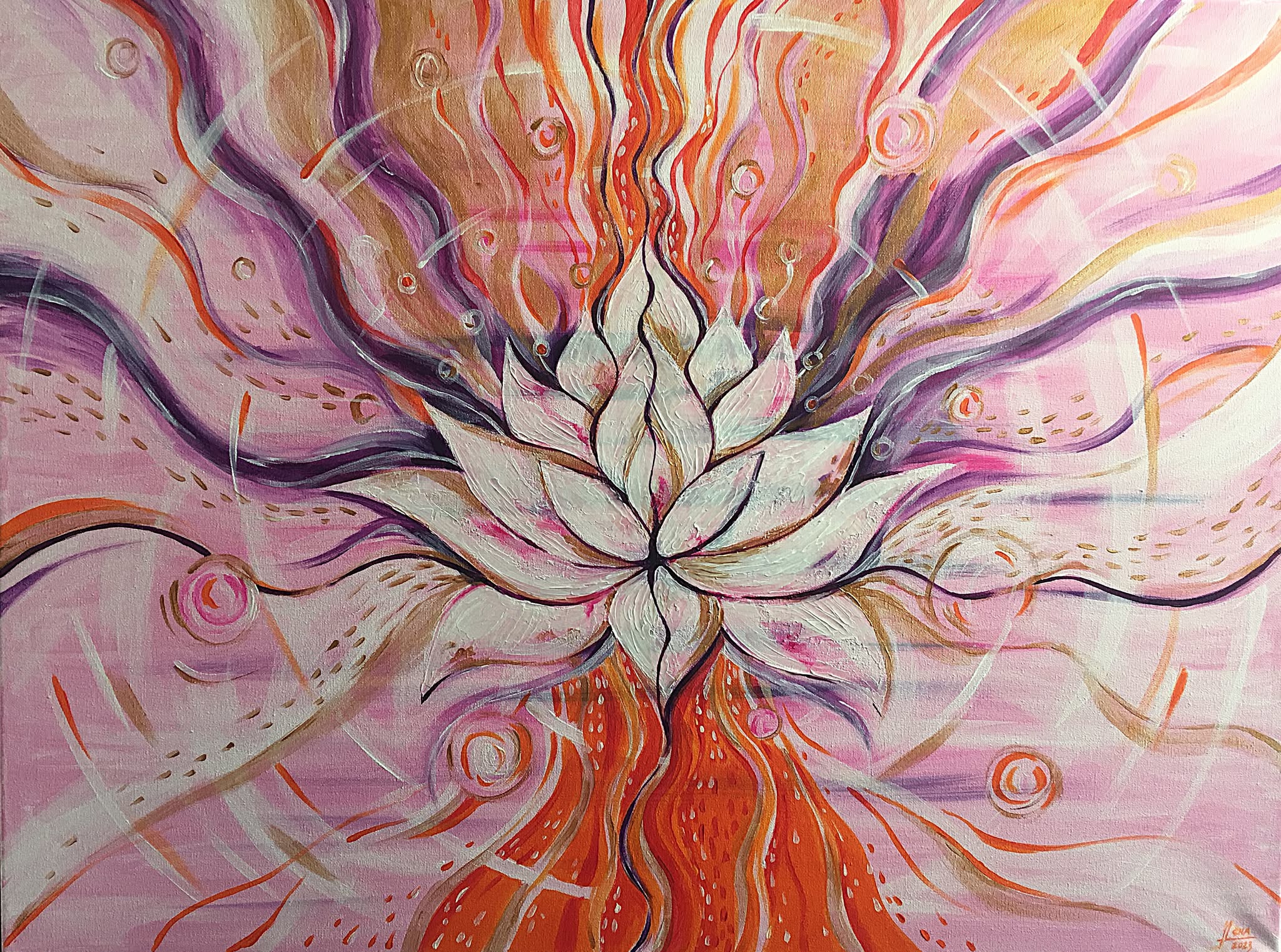
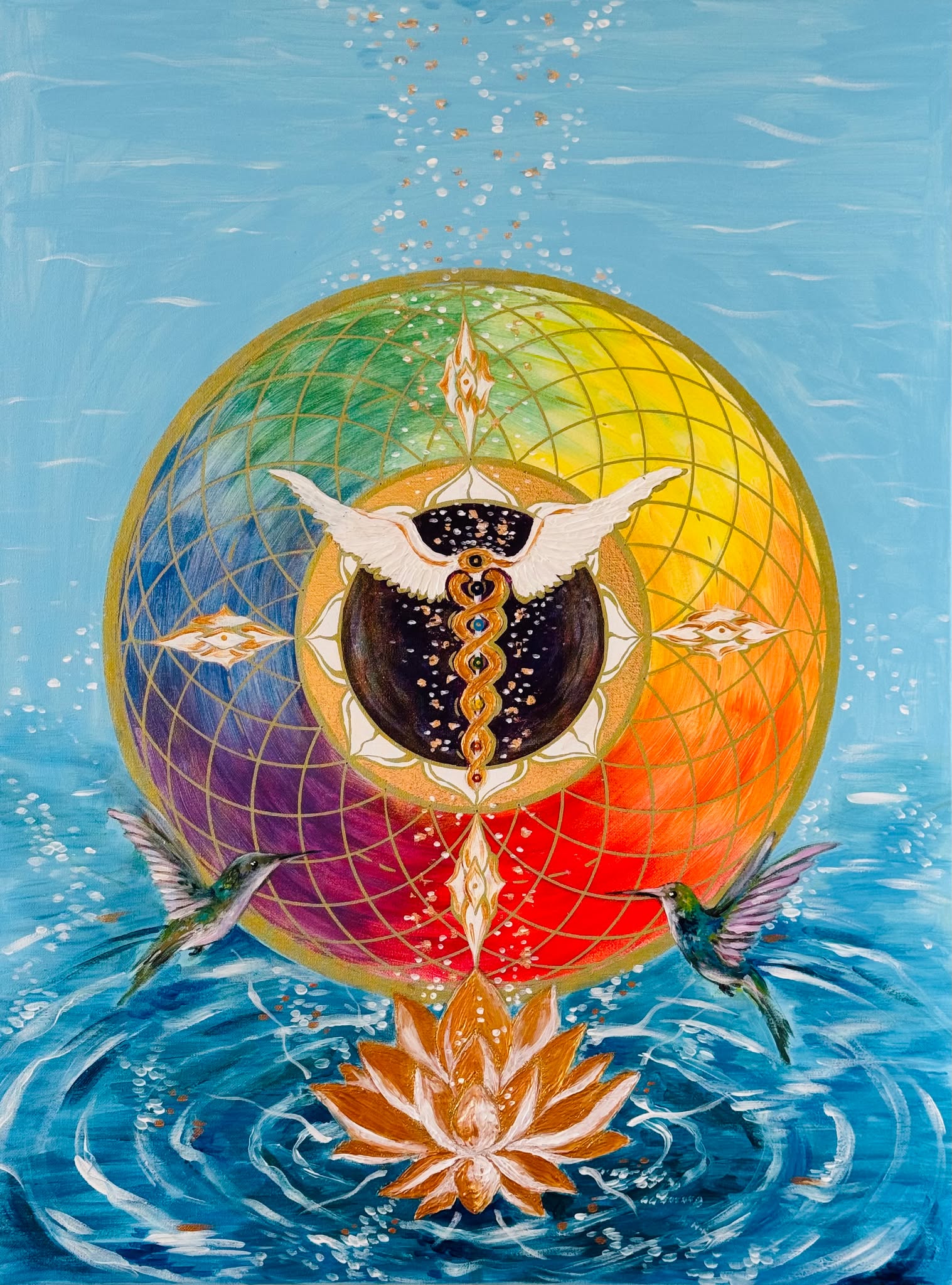
Painter Ilona Dargienė lives and creates in Krakiai, Mažeikiai District, Lithuania. From an early age, she was accompanied by a sensitive appreciation of beauty, creativity, and a desire to express herself through art.As a child, she enjoyed designing and sewing clothes for dolls, copying illustrations from books, and coloring. At school, she served as the school chronicler. The sound of the violin touched her heart so deeply that she devoted two years to learning the instrument.She also participated in a folk dance ensemble and studied at the Mažeikiai Children’s Art School, where she graduated with a specialization in graphic arts and linocut techniques.From 1989 to 1994, she studied in Telšiai, at what is now the Telšiai Faculty of the Vilnius Academy of Arts, earning a diploma in Industrial Product Artistic Design. For her graduation project, she created a unique set of nickel-plated cutlery.After completing her studies, she returned to Mažeikiai and began working in the field of advertising production as a designer, later becoming an advertising manager. She contributed to building a local company’s image, developing projects, and marketing strategies. More than twenty years of her professional life were devoted to visual advertising production. Looking back, however, she feels that this period did not provide a true outlet for her soul’s creative expression, despite the many successful projects she helped bring to life.Following this intensive period in advertising, an inner calling encouraged her to slow down and turn inward. This led her to art therapy, fractal drawing, self-development literature, wellness practices, meditation, and other methods of self-discovery. Experiences at the Arts Center summer art camp in Vilnius and mandala workshops in Kaunas awakened her soul and nurtured a desire to create something uniquely her own.In 2016, inspired by inner guidance, she founded the creative activity “Soul Colors” (Sielos spalvos). Her pursuit of inner harmony and her wish to share her experiences with others encouraged her to follow a heart-centered path. She personally conceived and designed the project’s logo, depicting a sun with expanding rays filled with colorful circles within a yin-yang-inspired sacred geometry silhouette. Through this symbolism, she expressed the intention of her work: sharing, spreading light and positivity, celebrating diversity, guiding people toward inner harmony, and cultivating self-love.Her work began with the fractal drawing method. She conducted workshops for women and devoted considerable time to drawing, exploring, and researching the technique herself. In her view, this methodology fulfilled its purpose during that stage of her life and opened the way for the emergence of mandalas in her creative practice.One day, she intuitively created a drawing within a circle. It came from deep within. At the time, she did not realize it was a mandala, as she had never heard of them before. Intrigued, she began researching their origins and meanings. Through this symbolic language, she found a fascinating way to explore both herself and the world. For example, the structure of a mandala can be seen in nature—in the form of a sunflower blossom or a snowflake. Mandala-like patterns also appear in the architecture of many cultures. In Lithuania, they can be found in wrought-iron sun crosses, distaff decorations, and Easter egg ornaments.Intuitive drawing within a circle became a safe space for creative self-expression, allowing suppressed emotions to settle onto paper and bringing hidden aspects of the subconscious to the surface.In addition to creating intuitive mandalas, Ilona is a practitioner of various mandala drawing techniques and methodologies. These include Ursula Irgang’s Light Mandala Method, which combines numbers, colors, and vibration, as well as Oksana Pelipenko’s Angelic Mandala Drawing Method based on one’s birth date, aimed at expanding self-awareness through angelic energies. She shares these practices through workshops for women and children, as well as through social media platforms.Throughout these years, she has continuously expanded her knowledge by studying alternative art forms, Reiki therapy, sacred geometry, subconscious practices, psychosomatics, and aroma psychology, all in search of harmony between the inner and outer worlds. She seeks that feeling of well-being that comes from being fully oneself, exactly as one feels called to be.In 2021, a course in energetic painting further broadened her creative expression through mandalas and deepened her perception of space. Sacred geometry naturally integrated into her work and continues to expand her consciousness, repeatedly revealing new layers of self-discovery related to connection with the Higher Self, the harmony of body, soul, and spirit in everyday life, and an understanding of universal laws. She also began experimenting with various textures, giving her canvas works a distinctive three-dimensional quality.Currently, she is preparing for an exhibition to present her artwork to a wider audience.Art is a unique language that requires no words. It speaks through colors, forms, symbols, moods, and emotions. When viewing the work of Ilona Dargienė, one enters a world where colors become carriers of emotion and each painting tells a unique story about the human inner world, the beauty of nature, and the harmony of life.Her works stand out for their sensitive use of color and their ability to convey subtle emotional atmospheres. In her paintings, color is not merely a decorative element—it becomes the primary means of artistic expression. Gentle tonal transitions, rich accents, and harmonious compositions create a special emotional connection between the artwork and the viewer. The colors seem to invite us to pause, listen to ourselves, and notice what often remains unseen amid the rush of everyday life.Looking at Ilona Dargienė’s paintings, one experiences not only aesthetic admiration but also emotional closeness. Each artwork encourages a personal dialogue with the viewer. For some, it evokes childhood memories; for others, it recalls the grandeur of nature or a sense of inner peace. In this way, her art becomes not only a visual experience but also a spiritual one.Within the context of Lithuanian contemporary art, Ilona Dargienė’s works are distinguished by their sensitivity and the elegance of their colors and forms.Her creative work demonstrates that art can serve as a bridge between the external world and the human soul. Through the language of color, her paintings communicate what is sometimes difficult to express in words: a love of life, sensitivity to beauty, a connection with nature, and faith in harmony. Her works do more than decorate spaces—they enrich the inner world of the viewer, inviting deeper reflection on oneself and the environment that surrounds us.The world of Ilona Dargienė’s paintings is a universe of color, feeling, and light in which every viewer can discover their own story and emotional reflection. Such art reminds us that the true beauty of creativity lies not only on the canvas but also within the human heart. Art critic Gabrielė Kuizinaitė