The guest Gatvės meno galerija
The guest Gatvės meno galerija: from walls around us
It began with a quiet walk through the streets of Vilnius. On a white fence, the phrase "justbe afraid of not believing" ("tik bijok netikėt") – lyrics from Lithuanian actor SauliusMykolaitis – made you pause and reflect. This wasn't just graffiti. It was poetry made publicand waiting to be noticed. Back in 2013, Vilnius started its first international street artfestival welcoming artists from all over the world. In that same year, Kristina Kurilaitė begannoticing art wherever she walked.That moment of noticing became a practice and daily ritual of writing and sharing newobservations. That's how Gatvės meno galerija was born – the first Lithuanian blog andonline magazine dedicated to street art. From Facebook photo albums of Vilnius and Kaunasmurals to digital magazine issues interviewing artists and exploring urban art in Lithuaniaand Europe, the project evolved in shape and scope. Yet its spirit remained rooted in onething – the joy of discovery.For over a decade, Kristina Kurilaitė has walked the streets of Lithuanian cities and beyond,documenting ephemeral art that might vanish overnight.How Street Art Shaped Lithuanian CitiesWhat was once dismissed as vandalism is now recognized as public art. For this transition wecan thank the EDIT Vilnius Street Art festival (held from 2013 to 2017 in Vilnius) founder anddirector Ūla Ambrasaitė. Her vision invited world-renowned artists like Millo, Os Gemeos,and Mobstr, who left their marks on Vilnius walls. The mural of Millo, painted for the festivalin 2015, is still there – part of Vilnius' alternative side.In Kaunas, the mural "The Old Wise Man," painted in 2013 on the former Fluxus building byTadas Šimkus and Žygimantas Amelynas, has become a true symbol of the city – now part ofthe Kaunastic identity. It also marked the beginning of Kaunas' mural movement, alongsidethe Nykoka festival. Kaunas embraced street art as a mirror of its spirit and a magnet forvisitors.12 years ago, artist Ray Bartkus invited the world to Marijampolė. Artists from London andNew York joined local volunteers to colour the city’s walls. Today, it remains a cherishedsummer tradition –an ongoing dialogue between artists and the community.Art Beyond the Gallery WallsNow shaped primarily as a social media blog, the project documents street art acrossLithuania and abroad. It embraces a personal yet curatorial voice, reflecting on murals andother street art pieces, paying tribute to artists who created them. From small-town murals
to large-scale works abroad, Gatvės meno galerija frames each encounter as a dialogue:between artist and the city, art and the viewer.Recurring Instagram series include #FromTheArchives, #LithuanianWalls, and#TravelDiscoveries. Each of these highlights different aspects of street art: rediscoveredmurals, local street art discoveries, and international finds. Together, they offer contextabout the artworks and artists while inspiring people to seek out these pieces in person.#LithuanianWalls recently featured a mural “The Floating World” by Ray Bartkus inMarijampolė, that was painted a decade ago and was even chosen as the most beautifulmural in Lithuania.In a cultural landscape where street art is still sometimes overlooked or misunderstood,Gatvės meno galerija affirms its value: as public art, as free art expression, and as sharedexperience.More than a photo archive, it is an invitation to pause, to look up, and to join a communityof art observers who find colour wherever they go. It reminds us that art lives not only ingalleries, but in the streets we walk every day.Check new posts on social media:Instagram: @gatvesmenogalerijaFacebook: Gatvės meno galerija (a page and private Facebook group)Online magazine archive: issuu.com/gatvesmenogalerija
The artist Gloria Fu Keh Singapore
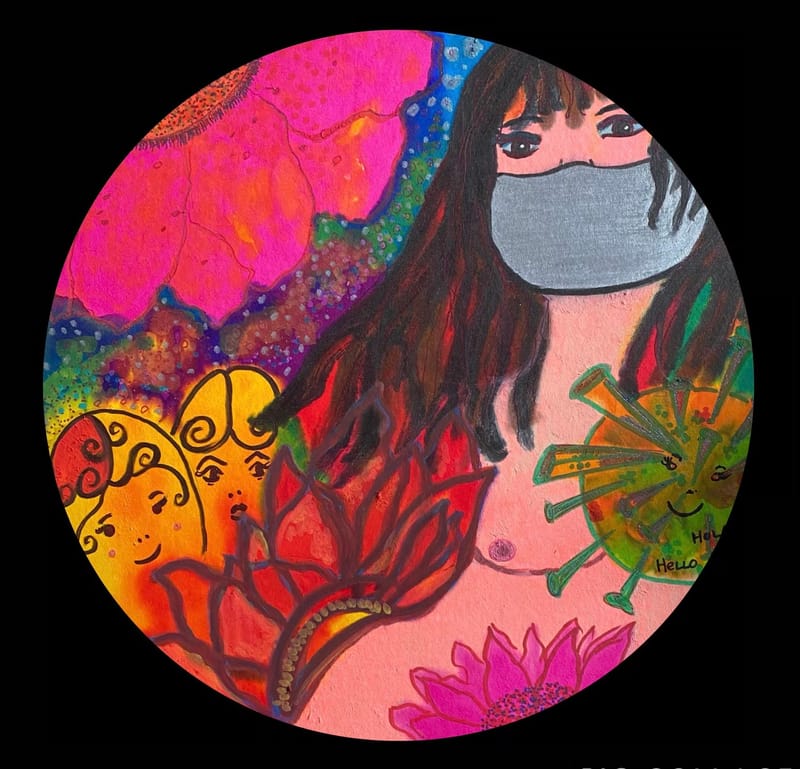
04-08/2025 Singaporean artist Gloria Fu Keh's works between traditions and modernity . The work of Singaporean artist Gloria Fu Keh is characterized by the use of various techniques and the creation of various works, dominated by abstract motifs, floral motifs, and recently figurative motifs appear in her ink works. Gloria Fu Keh's works are meditative and involve the viewer.The work of Singaporean artist Gloria Fu Keh is interesting and unique, giving the viewer freedom of choice. The work of artist Gloria Fu Keh stands out in the Singaporean and European art context. The year was 1952, when Gloria Keh was born in the Chinese Year of The Dragon.Her late father, Martin Fu, was an oil painter, who although never achieved fame, and died poor, enjoyed many rich experiences from his art and his love of classical music and European opera. Gloria was blessed to grow up in a household surrounded by art and music. Not only did her father paint a great deal, but her late elder brother had a passion for making watercolor paintings which were always of very serious looking Catholic saints. And mother would spend her leisure time coloring black and white comic books. But art is art, no matter what the subject may have been. Because it was a difficult task making a living as an oil painter, her late father was forced to work in an advertising agency, as a commercial artist, in order to support his family. Gloria would also hang around her father, either in his office, or when he freelanced, working on graphic art, at home. She enjoyed watching him work, making art... Hence, she was exposed to commercial art and graphics from a very impressionable age. In addition, to subsidise her allowance, Gloria began peddling little artworks drawn and painted in poster colors, even before she was 10. She would sell her little drawings/paintings for $3 a pop, indeed a princely sum in those days for a child.However, with the passage of time, Gloria entered the work force, taking on jobs in other fields of employment, that certainly afforded better monetary rewards than art. Sadly, art was to take a back seat for a long time, until 1996, when in Melbourne, Gloria began serious study in mandala art and symbolism. Her teacher, Georgina Fode of the Theosophical Society, played an important role in her development as an artist. Her study in mandala art and symbolism continued for a decade, following which, upon the blessings and request of her mandala teacher, Gloria began facilitating mandala workshops both in Melbourne and Singapore. She also undertook a short study course in art therapy.Although she attributes her first art teacher to be her late father, Gloria studied oil painting under P. Gnana of Gnani Arts in Singapore. And acrylic painting under the watchful eye of her mentor, Gregory Burns.Says Gloria: “As I age, I prefer the comforts and quiet of solitude. Painting provides me with a form of meditation, and I find inner peace and healing through my art.” Could you describe your artistic journey?
It all began when i was a child. My late father, Martin Fu, was an oil painter. He inspired me and taught me how to hold a brush. I spent hours watching my father paint. Inspite of all his financial problems, my father would be as happy as a lark when he painted. He was poised, focused and at peace whenever he painted. I saw wisdom in that and wanted this for myself. We were very poor and I loved coca cola and chocolates. As we could not afford such luxuries, I began to sell my little artworks when I was about seven years old, so I could buy and indulge in my yummies. When people ask me why did I begin to paint, my answer is ‘because of Coke.”
Fast forward to me being a young woman. Making a living from art was not possible, so art had to take a back seat as money needed to be earned, a house had to be bought and painting could not pay the bills. I returned to painting in the 1980s, more as a hobby. Then around 1996, I took a more serious approach to art and painting. I began a long study of mandala art and symbolism in Melbourne, Australia that spanned over 10 years. By 2008 I was painting a great deal, facilitating workshops and conducting art sessions on a volunteer basis at charity homes and institutions.
Began exhibiting in 2012 and since then have participated in over 200 international exhibitions. Happily, now at 73, I have staged 16 solo exhibitions, most outside my home country.How would you describe your artistic style and what motifs are most common in your work? I paint by intuition.
I do not subscribe to just one artistic style. That would be too limiting for me. Frankly, it would bore me. I believe in freedom of expression.
My style varies according to my prevailing moods, state of mind. How has your work evolved over the past few years? Major works are definitely becoming more and more abstract.
There is a sense of ‘freeing’ in the work.
The work courts formlessness. I prefer to go beyond form. To include at most ‘suggestions’ of form.
That said, I have a passion for collage wherein I usually use extracts, prints of my own art. What symbols or metaphors do you use most often and why? Again, dots and circles because of my deep connection with mandala. The circle is all about wholeness, oneness, no beginning and no end. This speaks to me.
I also use the lotus alot, as this is my favourite flower and a symbol of universal peace. To me, peace is paramount. I make art for inner peace as believe that peace begins with me, the individual. As an individual I cannot physically do much for world peace. But when I have inner peace, I can function from a point of clarity, serenity and power. And this inner peace ensures positive and correct actions towards outer (world) peace.How does the cultural environment of Singapore influence your work?Singapore is a small island thats cosmopolitan. We have four major ethinc groups, a huge expatriate community. Undeniably, living in harmony with peoples of other races and religions definitely has influenced my art. I respect the traditions of the many cultures present in Singapore and often incorporate various aspects of these cultures in my work. Racial harmony is essential for peace, and as I said before, peace takes priority in my work. What place do femininity, body and identity occupy in your work? When I began exhibiting around 2012, my first works honored the female form. I remember painting and selling many works from my Mother series. Those works were more in the contemporary vein, sometimes quirky, often whimsical, with exaggerated female forms. But always feminine. I am a woman who loves nudes. However, these days my nudes are more in abstraction. How do your Asian roots intertwine with global artistic influences?I am not often influenced by global artistry. I admire many works of many international artists, but I am my own person. I paint what I want, when I want, and how I want. Am not into trends. I work alone, prefer silence and solitude and am contented with what I have been blessed with. I enjoy sharing my art. Am thankful for the joy and blessings that art has bestowed me. But art is not everything to me. I paint in thanksgiving. My artworks are my painted prayers. I only paint. I am not finding a cure for cancer. I believe one must be practical. I have seen how obsession with art or anything else for that matter can easily land one in la la land. How do you think the voice of female artists in Southeast Asia differs from the Western context?I cannot comment much on this but from what I have experienced, female artists from this region are well heard. In today’s world stage, women are definitely coming to the forefront. The old traditional ways of female subserviant conditioning are becoming a thing of the past. Asian Women do speak up. What is your experience as a female artist in Singapore? What challenges have you faced? I studied Vedanta, Buddhist meditation and yoga philosophy for several years, and must admit that the teachings have inspired my work. Again, I will always remain a student of the mandala, and abide by the wisdom of the Circle. Quotations often inspire me to create artworks incorporating the wisdom of sages, the Japanese haiku master Basho, and the Sufi mystic Rumi. I love zenga, the art of Zen, and in my daily sadhana (spiritual practice in sanskrit), i often take refuge in the single brushstrokes of the enzo.
Making enzo is a powerful practice thats so centering. This is when a freehand circle is rendered in a single brushstroke along with one long slow breath. Breathing in I inspire for inspiration. Breathing out, I let go and accept. Just awareness and attention to the simple act of breathing fuels inspiration. What philosophical or psychological aspects inspire your work? Most things inspire me. From the sound of a splashing fountain, to a shape of a leaf. I believe the planet offers us an amazing plethora of ideas, inspirations. If we listen, watch, observe, we will never be out of inspiration. Plus, the more I paint, the more I get inspired, and stay inspired. Art begets art.
I have ongoing themes that i often make art of. For example: aqua peace, waves, cosmic peace, and bookart. I make art books regularly just for my own pleasure.
Yes, personal experiences do influence my art. I love things japanese, and japanese art. Often, my work, especially for mailart exchanges and the trading of Artist Trading Cards carry a japanese theme. How does your work help you reflect on your own identity or transformations in life? Answer: In addition to painting large canvases, I spend alot of time working on my personal art journals. To me my artworks are my painted prayers, my meditations. In keeping an art journal, I delve into my thoughts, confront my inner demons. Art ensures negativity, depression, destructive thoughts are kept at bay. Art keeps me focused. Gives me the one pointedness that is necessary for success. This is not just success in the outer world, but success in the satisfaction, that I am on the right track fulfilling my soul’s purpose. And surely one must have a sense purpose in this lifetime? Thank you for very interesting interview The interview preapeared by art critic Gabrielė Kuizinaitė
The puppet creator Erika Šuklinskienė
30/07/2025 The puppet world of creator Erika Šuklinskienė from sketches to stories
The well-known puppeteer Erika Šuklinskienė lives and works in Kaunas, Lithuania. She organizes personal puppet exhibitions and educations in Lithuania. Her artistic puppet works are published in international artist books in Argentina and France, as well as in the international German art magazine “Goddessartsmagazine”, as well as in the Lithuanian press.
In 1994 she graduated from Kaunas Eiguliai Secondary School. She received secondary education. In 2024 she graduated from the King Mindaugas Prof. Training Center. She received a social worker profession with honors. The artist is actively involved in the fields of theater and puppet education.
From 1987 to 1992 she attended the puppet theater “Nykštukas” and, as an author, learned the basics of acting, sewing theatrical costumes, glove puppets, and making masks. The directors of the puppet theater were Jūratė and Darius Armanavičiai. The artist’s first debuts as an actress took place in this theater.
From 1994 to 1999, while still in high school, the author recited poems, composed poems, and hosted events. At the age of fourteen, she founded the children’s drama group “Zuikutis,” which existed for five years. She was the only one who had a drama group of this type before. She often participated in school festivals. Together with the children, she created costumes and decorations, wrote scripts, and acted in performances herself. Since then, the author’s activities have been written about in the press. The author’s greatest activity and the most roles were created in the “Drakoniuko” theater.
Erika Šuklinskienė's glove puppets are talking glove puppets. The collection usually presents collections of puppet trees and beetles. These are talking puppets. They are intended for children and adults. In each collection of E. Šuklinskienė, the creation technique and aesthetics are of great importance.
Not only emotions are important in the author's work, but also interactions with art.
What makes the work of the artist-puppeteer Erika Šuklinskienė unique?The dolls of the artist Erika Šuklinskienė are unique and impressive in terms of art, they are characterized by different artistic constructions and forms, and bright colors dominate in each doll. Each doll is humanized, embodies a certain character and has a unique character. Each doll has its own creation story, each doll is unique, some dolls are even accompanied by fairy tales or scenarios created by the artist, which later turn into live performances. Each doll has its own voice and certain facial movements. Similar types of puppets or existing puppet glove mask characters can be found in other countries: Germany, England, Italy. The different roles of puppet masks are characterized by satire and grotesque.
Art critic Gabrielė Kuizinaitė
The ceramist Lina Danilienė
01/09/2025 Kiln stories, in which clay is reborn - the work of ceramist Lina Danilienė
She was born in Kaunas, living and creating interesting ceramic works, ceramist Lina Danilienė lives and creates in Lithuania. The creative path of the artist, who creates in several artistic fields, began quite early: while studying at an art school, she attended violin and piano lessons. Later, she graduated from the Vilnius Academy of Arts, Open School of Art, Design and Architecture, with professional artist Ieva Bertašiūtė-Grosbah. Already studying in various artistic fields, the artist had her own unique style and style, and her unique stylistics are especially felt in the author's exceptional one-of-a-kind ceramic works. Today, the creator, who combines the exceptional arts of painting and ceramics with her special works, is popular not only in Lithuania, but also successfully participates in international exhibitions abroad. Ceramic works by ceramist Lina Danilienė are distinguished by their geometric and mosaic forms, focusing on butterfly symbols, flower and plant motifs, and the perpetuation of heritage and ancestral signs. Although the author uses traditional technologies in her ceramic works, she achieves strong aesthetic, subtle and at the same time modern forms. More than one ceramic work has already adorned more than one interior as an interior detail. Although the color range and palette of the artist's ceramic works are diverse, bright, sometimes muted colors dominate in a frequent work. Subtle, sometimes refined textures reminiscent of a mosaic play dominate. Subtle aesthetic and artistic solutions are important. An important place is occupied by artistic stories from the inner and outer worlds, which are related to people's stories, feelings and experiences. Speaking about her kiln stories, Lina Danilienė, the author of exceptional ceramic products, says: “..Kiln stories are a small miracle in my everyday life. This miracle is very much awaited, it is like the final incredible result of a week, all the work and a broad smile that cannot be held back – every time I open the kiln door, it is still warm. I don’t know what I will find behind them. They are often cheerful and colorful, but there are also more gloomy moments. But they are also a part of life, a part of my story. Kiln stories are a part of my life, as a creator, in the village, surrounded by nature and silence – where what is sincere and true is born. It is faith in my dream, faith and hope that everything will work out, that I will overcome everything and I will succeed. I will manage to make the clay speak, find and preserve the outline and expression of my creativity.. Because I have something to say.. Each of my works is all about me, and my personal life story - where I am not afraid to show myself as I really am - without appeasement, without fear of condemnation, without attempts to maintain something and conform to something - this is a state of true, self-created freedom... To be myself and for myself and to firmly know that only my inner light will attract those who need it, and what is unnecessary will dissipate like smoke by itself - in my daily stories of the furnace.. " Art critic Gabrielė Kuizinaitė
The photographer Romualdas Augūnas
Photographer Romualdas Augūnas photographic journey through the connections of images and time .
Currently, the Birštonas Cultural Center is hosting a personal photography exhibition by photographer Romualdas Augūnas, traveling around Lithuania, titled “Flight Above Everyday Life”. Before that, the personal photography exhibition and album of photographer Romualdas Augūnas was presented in Kaunas. Photo artist Romualdas Augūnas has been interested in photography since 1965. The artist creates in the field of experimental photography, in the documentary genre. This computer technology gives the author the opportunity to transform images, use altered visual images, attract, intrigue. Although the photographs of photographer Romualdas Augūnas cover various topics, the theme of Kaunas city, architectural and natural motifs, and everyday motifs dominate. Photo artist Romualdas Augūnas has published several photographic art albums. R. Augūnas has a unique photographic style in his work, in his work the author presents unexpected images of famous places, buildings, objects, monuments of Kaunas, which, using various colors and shapes, acquire unexpected color combinations. The author of the photographs presents about ten artistic photographs from the catalog and the exhibition in the international art magazine “Contrasts”. In the works presented in the artistic photography album and the exhibition, the author mostly captures places in his city of Kaunas: Žaliakalnis, the Kaunas city surroundings in the Kaunas lagoon, the railway station surroundings, the IXth fort of the Kaunas fortress. The artistic photography album “Flight above everyday life” presents photographs created in the documentary genre. The photographer’s unique approach to the world of everyday images surrounding him is engaging, makes you think and compare what is real. In the album, the author occasionally presents a real black-and-white photograph of a building, object, monument, and later a transformed phantasmagorical image that raises philosophical questions and considerations.In addition to the already mentioned urban architectural images, natural motifs also appear in the album, the transformed details of which complement the photographic composition and give the image dynamic expression. It can be seen that the author of the photographs symbolizes well-known places in Kaunas, as if creating new symbols of Kaunas. What are they? Intriguing and engaging, transitioning into mystically mysterious forms, connecting earthly and cosmic reality.The photographic world of the photographer Romualdas Augūnas: exhibition and photography album “Flight above everyday life” invites its viewer to an interesting visual adventure that has not yet been experienced. The author sees everyday life from extraordinary perspectives. The connections of symbols, colors and forms, time, and images are extremely important in the artistic composition of each photograph. This author's exhibition encourages every viewer to think about how special moments encountered in everyday life can be. Art critic Gabrielė Kuizinaitė
The painter Ugnė Ieva Rima Stasiulaitytė-Dulevičienė
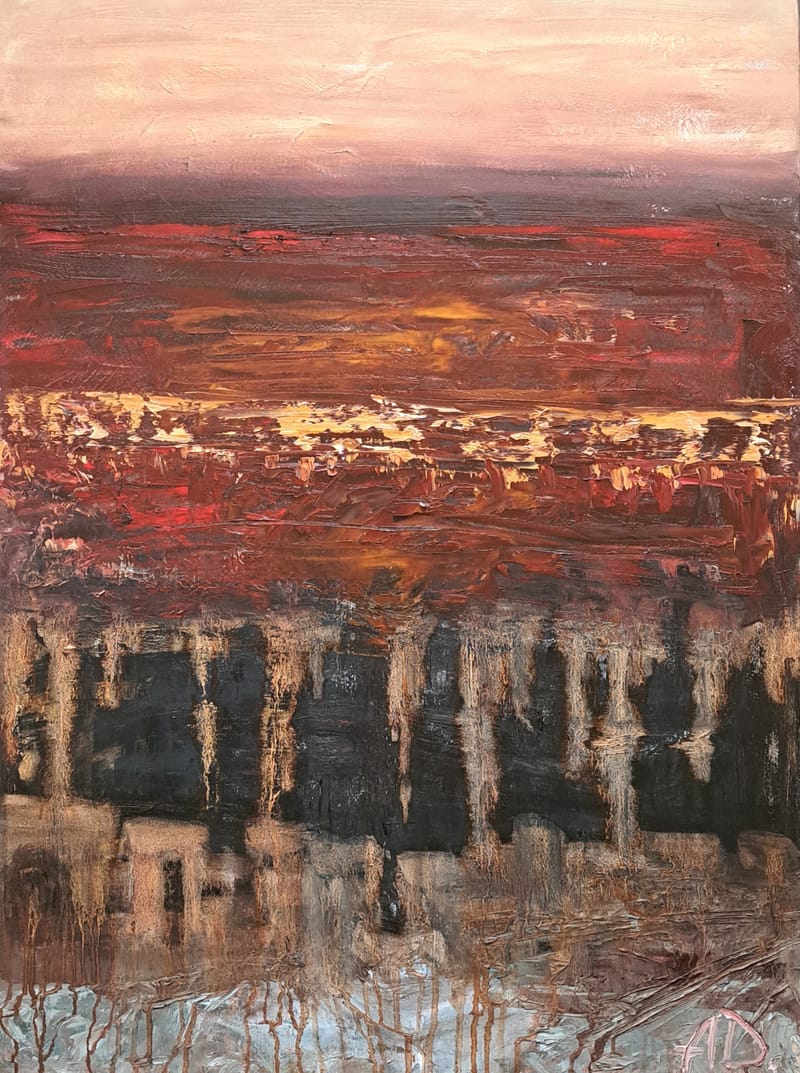
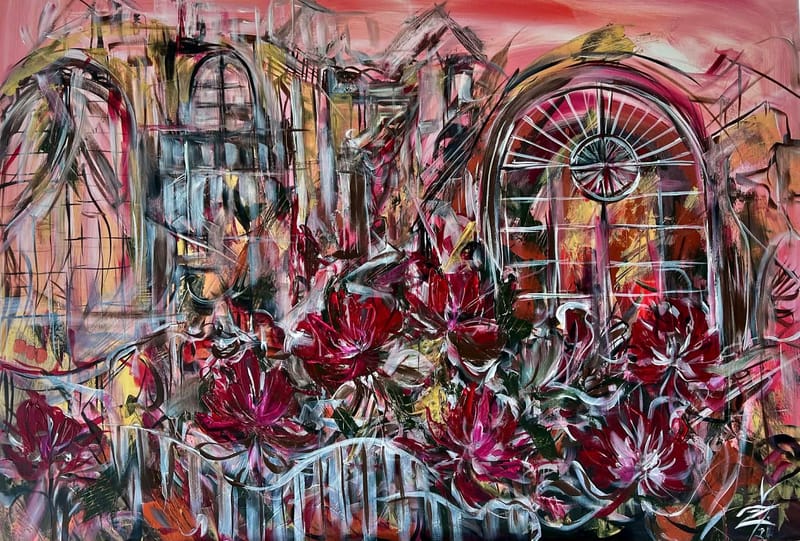
15/08/2025 Abstraction and Emotion in the artworks of the painter Ugnė Ieva Rima Stasiulaitytė- Dulevičienė creation. Painter Ieva Ugnė Rima Stasiulaitytė-Dulevičienė lives and works in Kaunas, Lithuania. She is a painter and interior designer. The artist's talent for painting was most noticed in the artist's family by her grandmother, who took the author to an art club in Kaunas at the age of five.She also studied at the A. Martinaitis Art School. In 1997-2000, painter Ieva Ugnė Rima Stasiulaitytė-Dulevičienė continued her studies at the Kaunas School of Applied Arts, where she majored in interior design and flower engraving. She completed her master's and doctoral studies in art education at the Lithuanian University of Education, which not everyone completes. The work of painter Ugnė Ieva Rima Stasiulaitytė-Dulevičienė is characterized by deep emotional and philosophical insights, questions of the human inner world and social life. All of the author's works are positive. Previously, the author painted more on architectural themes, currently the themes of nature and abstract flowers are relevant. In the international art magazine “Contrasts”, the painter Ugnė Ieva Rima Stasiulaitytė- Dulevičienė presents the following works: “Two”, “Living Life You Will Remember”, “Still Life”, “Dances”, “Storm”, “Woman in a Storm”, “Angry”, “Flowers”, “Flower”, one work from the cycle “Color Wheels”.The early work of the author Ieva Rima Ugnė Stasiulaitytė- Dulevičienė was dominated by more urban and architectural themes. One of the painter’s earlier works is “Kaunas Town Hall on a Black Background”. In this painting, the artist chooses the Town Hall as a symbol of Kaunas city, for which the various stories of the city revolving around it are important.In one of the author’s latest paintings from the cycle “Color Wheels”. This is a new collection of the painter’s paintings. In this cycle of paintings, the author delves into the colors and forms of life. The dynamics of colors are important. The painting uses wheel motifs and symbols. The essence of the painting's philosophy is when everything in life revolves in a circle. The painting is important for the dynamics of expressive colors, emotions revealed in the shapes of the circle.Summarizing the work of the painter Ieva Ugnė Rima Stasiulaitytė- Dulevičienė, it can be stated that pastel and bright colors dominate her work, sometimes dark color palette is encountered, architectural elements dominated in the author's early work, bright or pastel abstract work is often encountered. The author's work is dominated by dynamic and expressive color composition, colorful forms, existential and philosophical questions.1) Could you tell us how your creative path began, as a future interior designer and painter? I lived and grew up in Kaunas. When I was five years old, my grandparents took me to my first art group. 2) What fascinates you most about the creative processes of the interior designer profession? The opportunity to create is fascinating in both areas, both interior and painting. The most fascinating thing is innovation, the fact that on a canvas or a piece of paper you are an almighty God and it depends only on you what color combinations and shapes will appear in various canvas formats. 3) How does your interior project start with the idea or story of a color? Most often, the interior project I create starts with color and with a story. 4) What is your connection with painting at the moment and what art fields and forms are close to painting? In recent years, the connection with painting has been very close. Painting is like a refuge, refreshment for me. Support, rest, sometimes an emotional release. 5) What new painting project are you currently working on? I don't like to talk about new projects, it will be a new cycle of paintings, several new works have already been created. 6) How does the concept of the idea of your painting begin with an idea, vision or story? It usually begins with the Vision of the painting being created... 7) Do you have any ritual before starting to create a painting? I don’t have a specific ritual for creating a painting, because it starts differently every time. 8) What themes dominate your paintings? At the beginning of your work, architecture or fantastic or realistic flower beds with different names of paintings dominated. 9) For you as a painter, is the painting process like meditation or like a painting project? And yes, and yes, lately the creative process is usually like emotion, release, joy. Thank you for the interview, interview by art critic Gabrielė Kuizinaitė
The painter Lilija Kavaliauskienė
22/08/2025 The creative woeld of Lilija Kavaliauskienė
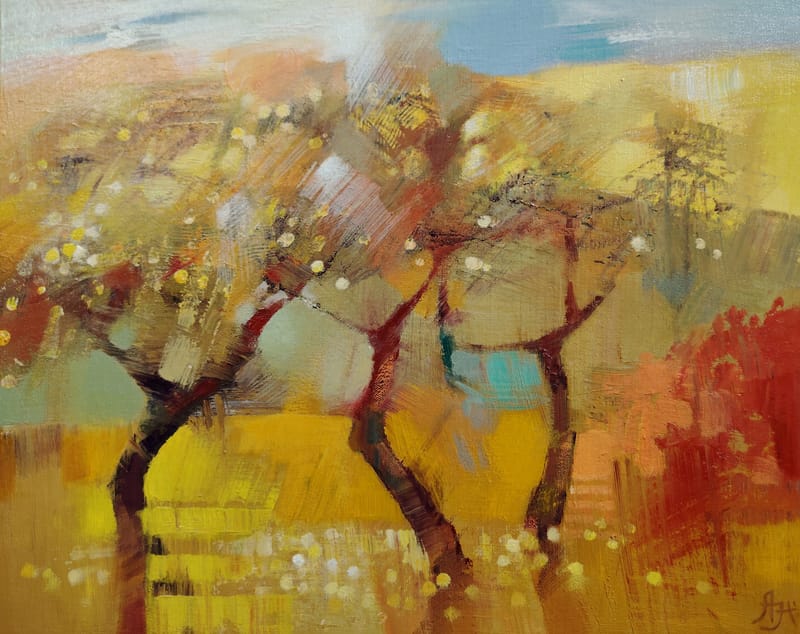
The creative world of the painter Lilija Kavaliauskienė: between color and emotion The painter Lilija Kavaliauskienė lives and works in Kaunas, Lithuania. The painter's source of inspiration is nature, which the painter presents through emotions, through subtle contrasts of color emotions and forms. The author uses mixed media in her work, creating on canvases of various formats. The artist's work is important for reflection on a sensitive connection with nature, on the philosophical relationship of man with the environment. The author's realistic and abstract paintings are dominated by intriguing and mysterious titles of works, bright colors, a subtle style and a dynamic color palette.In 1988, the painter graduated from Kaunas School of Applied Arts, majoring in interior design and toy decoration. Since 2023, the creative path of the painter Lilija Kavaliauskienė begins, she studies various painting techniques and various styles. Since 2025, she has been organizing personal exhibitions in Lithuania and participating in international collective art exhibitions in the Philippines, Turkey, and Italy. Each painting is dominated by a different title, which is intriguing, and different dynamic color palette combinations, reflecting the themes of the seasons. The author's philosophical approach to nature, as well as to the aforementioned themes of the seasons, are important.In the author's special work, colors and shapes, both in life and in her work, have a special meaning. The creative journey of the painter Lilija Kavaliauskienė began with oil painting, spontaneous, mysterious, lively and unpredictable art.Each of the painter's works, both realistic and abstract, reflects both inner emotions and the inner world.Speaking about her work, painter Lilija Kavaliauskienė says: “Each work was born from personal experience, moods and personal thoughts or experiences of the personal world, therefore, in each of my works you can feel a subtle joy, as well as melancholy, anxiety or peace.” Lilija Kavaliauskienė, the author of special paintings, said.
Art critic Gabrielė Kuizinaitė
The painter Jelena Prokopovič Serbia
06/08/2025 Colors and forms connections in artist from Serbia Jelena Prokopovič creation path .
Young generation artist Jelena Prokopovič lives and works in Novi Sad, Serbia. This is an internationally recognized artist Jelena Prokopovič. In 2011 - 2015, she graduated with honors from the Faculty of Fine Arts and Sculpture at the University of Novi Sad, Serbia. In 2019, she continued her studies in the field of sculpture at the University of Novi Sad, Serbia. The internationally recognized artist is often inspired by nature, influenced by the names of famous artists. The artist is often inspired by nature, social, political, cultural and existential issues in her work. Expressive colors and shapes, constantly changing themes are of great importance in the visual paintings of artist Jelena Prokopovič. I would like to thank artist Jelena for the interesting interview. Artist Jelena Prokovič was interviewed by artcritic Gabrielė Kuizinaitė. 1.Could you describe your artistic way and journey from the start career till these days? I was born in 1992 in Sremska Mitrovica, a small town in the northwest of Serbia. The city, which was once an important part of the Roman Empire, is still home to important archaeological sites that I loved to visit as a child. Maybe that's where my love for sculpture developed. My parents recognized my talent at an early age and I quickly started taking private drawing lessons. When I was about 10 years old, I knew that the Academy of Arts was my goal and I never thought that I could do another job. I completed Bachelor studies in 2015., and Master in Fine Arts in 2019. at the Academy of Arts in Novi Sad, Department of Sculpture. However, my love for painting developed parallel. Today, I am equally engaged in painting and sculpture. I live and work in Novi Sad. What inspires you in your creative processes? I draw inspiration for my art from my immediate surroundings and generally from observing the world in which I find myself. Today, it is impossible to remain isolated from informations related to global events, and unfortunately, we are witnessing major changes on a global level. Growing up in Serbia after the collapse of Yugoslavia, left a deep mark on my adult life. Led by that experience, I am very much affected by current events in the world, and my art is indirectly related to it. The series of works I'm currently working on is called "Fields of Dystopia" and are about the absurdity of the destruction that we as a society produce. Witch artists, styles, movements and directions have most influence on your work? I love contemporary art very much, because it fully satisfies my need for breadth of expression and does not limit me in any sense. I was greatly influenced by artists like Adrian Ghenie, Achraf Touloub, but also Francis Bacon, Tracy Emin. Then the movie directors, very important for my artistic development, Michael Haneke, Andrey Tarkovsky and many others. I like to take inspiration from everyone that touches me and thus expand my horizons and also to help me get to know myself. What is your memorable project and why? My biggest and most significant project so far is an art installation called "Habitat", realized in 2019. in the old brick factory in Belgrade. The installation contained over a hundred sculptures measuring up to 3 meters height and they represented an imaginary world that I created. That exhibition was inspired by dystopia and post-apocalypse. I created a world completely opposite to ours, a world without hierarchy and competitiveness. What is your memorable artwork cycles or arts projects and why? The series of works that I have been working on for a long time, "Fields of Dystopia", I classify as my most mature body of work so far, both in the artistic and philosophical sense. The images from this series were created as a visual response to personal experience and collective reflection on contemporary events in the world, and as an abstract landscape, the paintings evoke a Field of Dystopia. These paintings are transitional models, notes of thoughts, desires, needs and emotions that I, as a woman and as an artist, face in a society that on a global level is entrenched in totalitarianism, inhumanity, ecological catastrophe, as well as any kind of single-mindedness. Such a society, frightening and hostile to humanistic values, is in direct conflict with the traditional values that are integrated in me and my culture. The paintings I create are sometimes related to certain people from my life, who left a great impact on me, and sometimes that dialogue comes down to introspection and my paintings then take the form of complete abstraction in which I articulate my current emotional states. What is important in your work from the viewers perspectives? I think that something that is authentically related to my work is precisely the specific way of building pictures. At the beginning, I don't have an idea about a realistic presentation of a story that I want to convey to the viewer, but I have an emotion. The best pictures are always taken after some important moments in my personal life. In general, I'm not a talkative person and I have a hard time expressing myself verbally. I am like that in art too. My painting is abstract and I strive to convey pure emotion. I use the suggestiveness of color, layering it in a way to conduct an internal dialogue, thus creating authentic and meaningful images. In communicating with the audience, I realized that they are most intrigued by the originality and great emotional charge in my pictures. How does Serbia look today from the eyes of famous artists? As a small country in the Balkans, throughout history we have been in an ungrateful geopolitical position. Today we have a fight over resources, lithium exploitation, cheap labor. However, in the last ten months, Serbia has been intensively going through a very turbulent period at the internal level. After the collapse of the railway station building in Novi Sad, the city where I live, and the death of 16 people, the country was met with unexpectedly large protests, that didn‘t happen even in the 1990s during the rule of Slobodan Milošević. Mass student protests took place that restored faith in democracy, which is experiencing a major crisis not only in Serbia, but also in Europe, and certainly in global. I think this is a great chance for my country to straighten the rudder and finally finish with the autocratic regime that is in power. Also, I immodestly think that this is a good example from which Europe would have a lot to learn about togetherness, empathy, determination and humanistic values that these young people remind us of. What are your upcoming art project in your country and abroad? I am currently preparing works for two large exhibitions, one of which will be held in my hometown, Sremska Mitrovica, during the next year. This exhibition will be realized as part of the award I won at the art competition last year. The second exhibition is planned in Geneva, Switzerland, which I am very much looking forward to. My goal is to present my work to as many people as possible from different fields, because the feedback I receive is very important to me. It inspires me to create further and gives my pictures a chance for a new life.
The architecht and photographer Vito Catalano Italy
31/08/2025 he creative path of Italian artist Vito Catalano between light and form
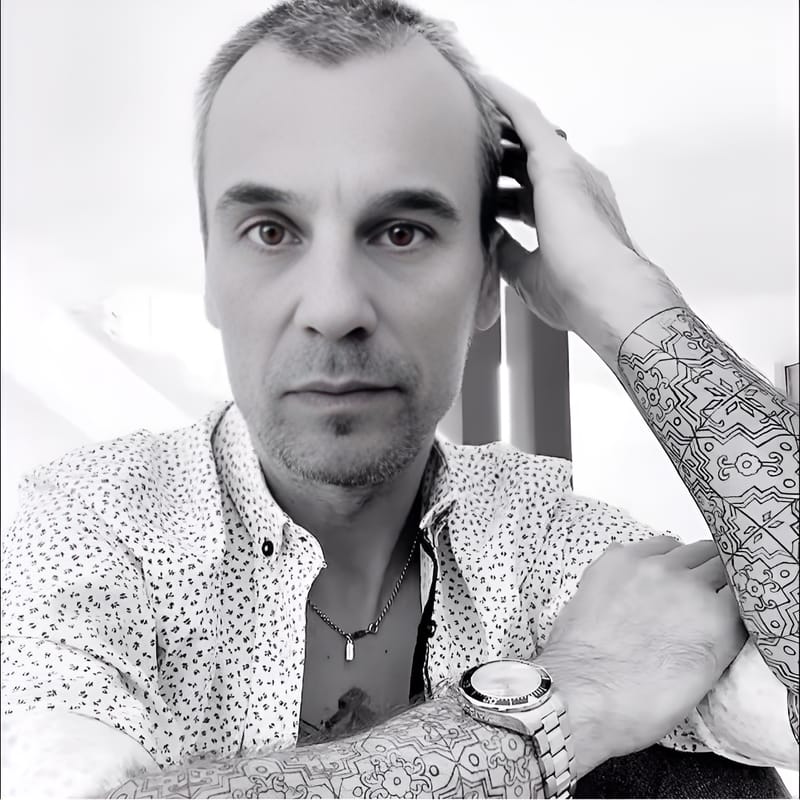
The famous Italian architect and photographer Vito Catalano lives and works in Milan, Italy. He is an architect, photographer. He was graduated the Jesuit Pennisi College in Acireale; - From an early age he devoted himself to painting and sculpture. Since 1962 he has been organizing personal exhibitions and participating in collective international art exhibitions. After graduating from architecture studies, he began working as an architect in the studio of Professor Gianni Pirrone, with whom he collaborated and worked in various fields of architecture and urban planning. Main areas of activity URBAN PLANNING, RESTORATION” in Palermo. The following Italian art critics have already written about him: Albino Galvano; Scroppo; Gianni Pirrone; G. Cervello; Ugo Canton; Carmelo Strano; Giovanna Buongiorno; Tania Giuga; Niccolo , D'Alessandro; Antonio Vitale.The famous Italian architect and photographer Vito Catalano proves that light and form in his work can become not only aesthetic, but also existential objects of research, he is known as a designer of large urban spaces. He began his photographic path with architectural and industrial cityscapes. In his photographic work, he particularly emphasizes the connection of light and darkness. In the author's work, a refined visual language, a sense of aesthetics, and the connection of light and darkness are important. The figurative language of symbols plays an important role in the artist's work. Art critic Gabrielė Kuizinaitė
The painter Aušra Bartkutė-Deviatnikova
09/08/2025 Dialogues of Colors and Inner Worlds by Painter Aušra Bartkutė-Deviatnikova
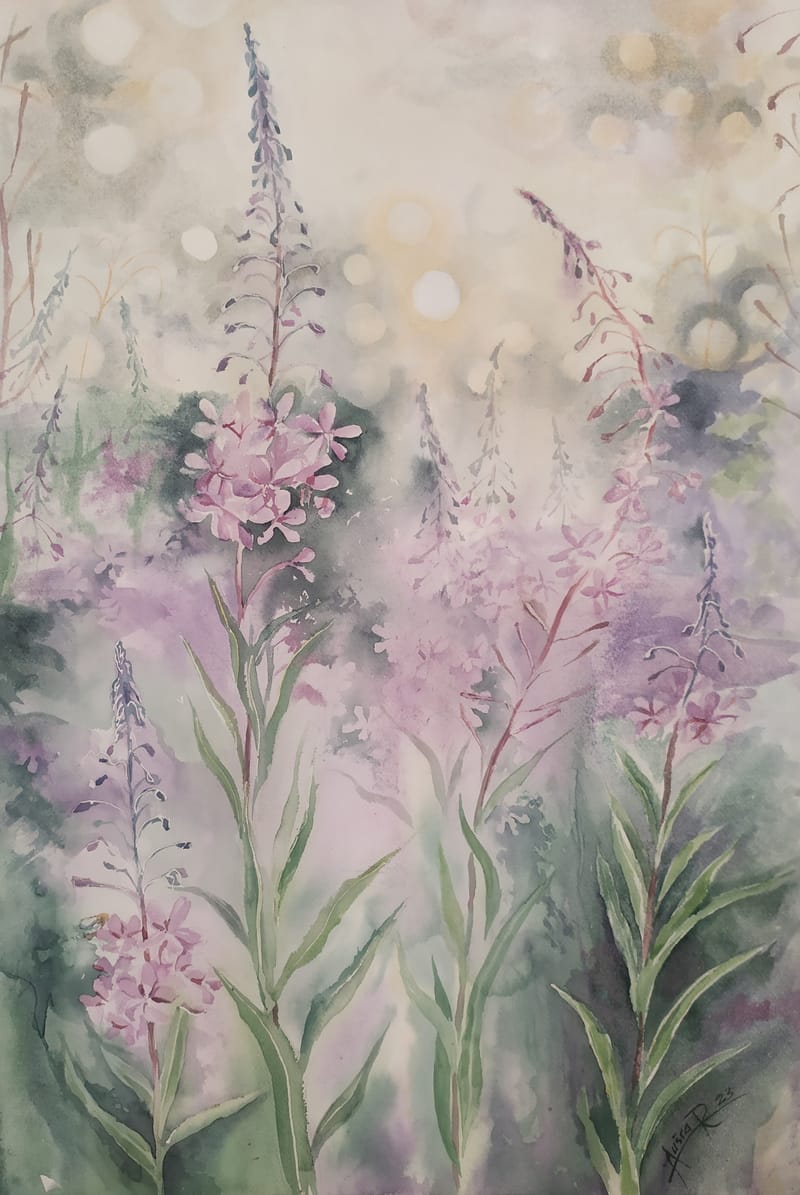
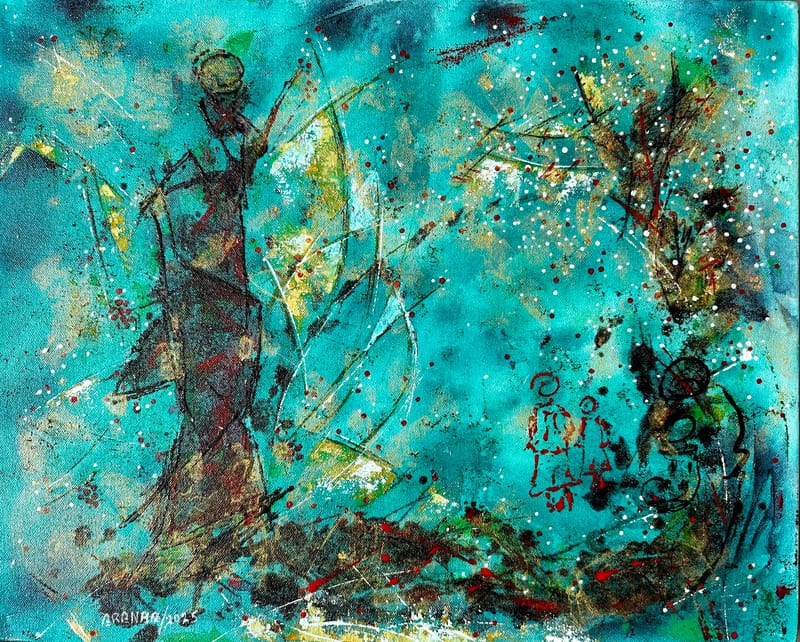
Painter Aušra Bartkutė-Deviatnikova lives and works in Lithuania. The author's artworks was most influenced by her grandparents and the author has been interested in art since childhood. The author studied Bachelor of Arts at Šiauliai University and studied art and painting with professional, well-known teachers-artists: Romanas Valkauskas, Vincentas Gečas, Ričardas Gerbačiauskas, Arūnas Uogintas, Vytautas Tribandis, Michalina Adomavičienė. In 2007, the author graduated from the Faculty of Arts at Šiauliai University. Since 2004, the author has been intensively organizing personal exhibitions in Lithuania, presenting her work at various gallery tastings, galleries and plein airs, international collective art exhibitions, and abroad. The painter, who has a unique personal style, says about her work: “During my studies and just after graduating, I highly valued the idea and concept in my work. It was important to express a position through painting, to express the aforementioned position on various socio-cultural issues. I considered it a means to create different themes, to create themes about my own and that era’s pain points. In recent years, no position has almost influenced me, my silence. I do not try to please anyone with themes, the author of impressive paintings shared her thoughts about her work. In the work of professional painter Aušra Bartkutė-Deviatnikova, meditation on colors, shapes, themes is important, each meditative painting work provides inner peace. The author explores the themes of nature or everyday life in almost every work. The abundance of layers is important in each work, each work has its own riddles and secrets. Summing up, professional painter Aušra Bartkutė-Deviatnikova's work, it can be said that the artist's work is characterized by deep themes and philosophical insights. In the artist's works, not only personal, but also relevant experiences are important for everyone, therefore each painting is sensitive, not only in the layers of strokes, but also in the entire painting, this is reflected.In the international art magazine "Contrasts” the author presents about 11 paintings of different formats and content, each of which invites the viewer to a personal dialogue with each work separately. The artist's work stands out from the works of other authors not only with its unique themes, but also with its exceptional color combinations, but also with its important philosophical reflections. Art critic Gabrielė Kuizinaitė
The graphic artist Dalia Ruibienė
07/08/2025 Dialogue between nature and art in the work of artist Dalia Ruibienė
Until now, the Kaunas Old Town Vincas Kudirka Public Library (A. Mapu. st. 18) has hosted a personal exhibition of the work of the artist: poet, photographer and traveler Dalia Ruibienė “Freed Fantasy”. The artist Dalia Ruibienė lives and works in Kaunas, Lithuania. In 1975-1979, she graduated from Kaunas Stepas Žukas Art Technical School, currently Kaunas College. Later, the author traveled extensively in Great Britain and Italy. Some of the abstractions of the artist’s works, which were exhibited in the library, were created based on travel impressions using various materials and techniques. Impressions from various countries are one of the inspirations of the author as a traveler, along with the elements of nature. The author creates in the fields of abstract, geometrized art. Each work is dynamic, unique in form and color play. Each work of the author has its own interpretation. In art, the author expresses many fantasies and interpretations, which merge with the search for symbols and colors. In the author's work, not only impressions are important, but also interpretations, but also the emergence of a certain symbolism in each work is important and the author interprets it differently. In the international art magazine "Contrasts" the author presents the following interesting works: "Mandala/summer Pescara IT", "Spring cocktail with lemon IT", "MAYA spring flowering", "Between heaven and earth IT", "Spring prelude IT", "Summer by the sea UK".Each work of the author is drowned between reality and liberated fantasy. In almost every work, unexpected artistic solutions, interpretations and forms, as well as colors, connections of natural elements and impressions from countries are important.Summing up the work of the artist Dalia Ruibienė, it can be stated that it is related to images of nature, elements of nature, artistic images of the world captured and immortalized on canvas. The dynamics of natural images and travel impressions are important in the author's work, dominated by elements such as wind, water, fire. The following main artistic aspects are important in the artist's exhibition "Liberated Fantasy": spontaneity and intuitiveness in lines, a characteristic free expressive drawing of lines and existing motifs, emotions for places of the world and images of nature. The artist's exhibition stands out with a unique and distinctive style, its own world and occupies a unique place in the context of Lithuanian art. The artist's exhibition "Liberated Fantasy" stands out with a unique and distinctive style, a unique approach to the world.In the author's creative interpretations, a dialogue between the viewer is of utmost importance. The exhibition of the artist Dalia Ruibienė "Liberated Fantasy" will also be available in other Lithuanian spaces.Art critic Gabrielė Kuizinaitė
The painter and photographer Ramutė Paulikaitė
09/09/2025 Dialogues of light and color in the experimental artworks by Ramutė Paulikaitė
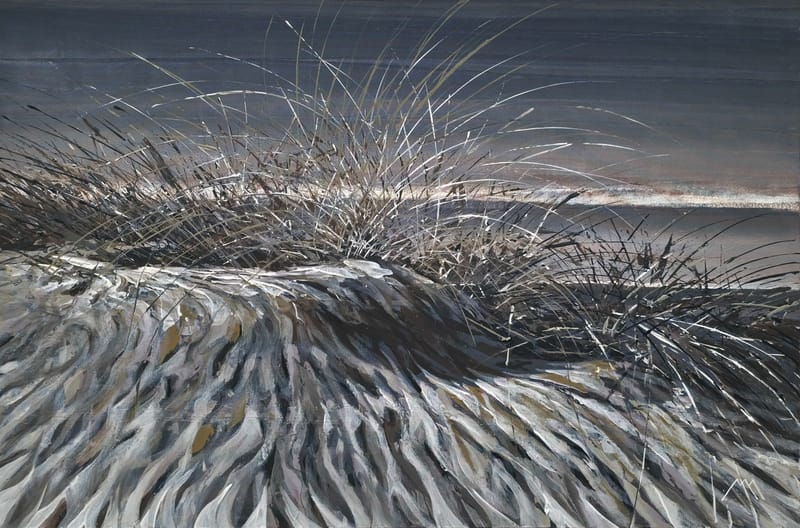
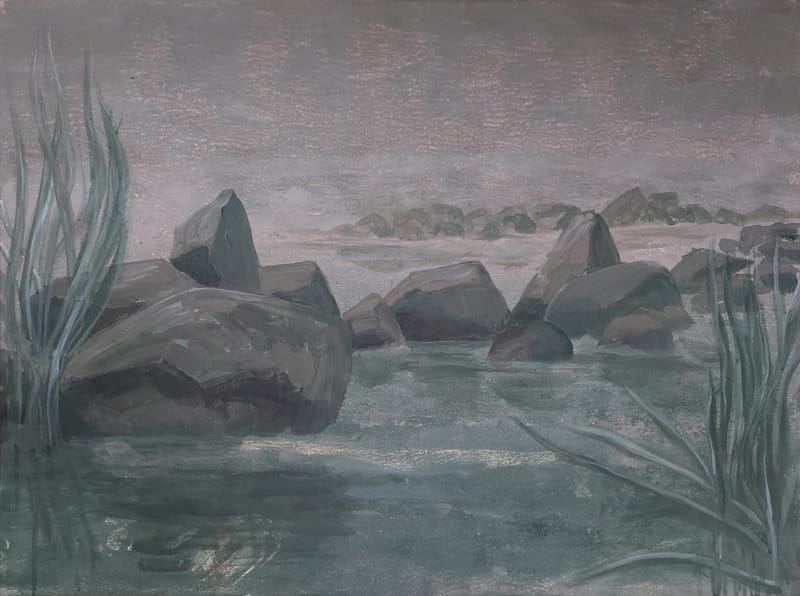
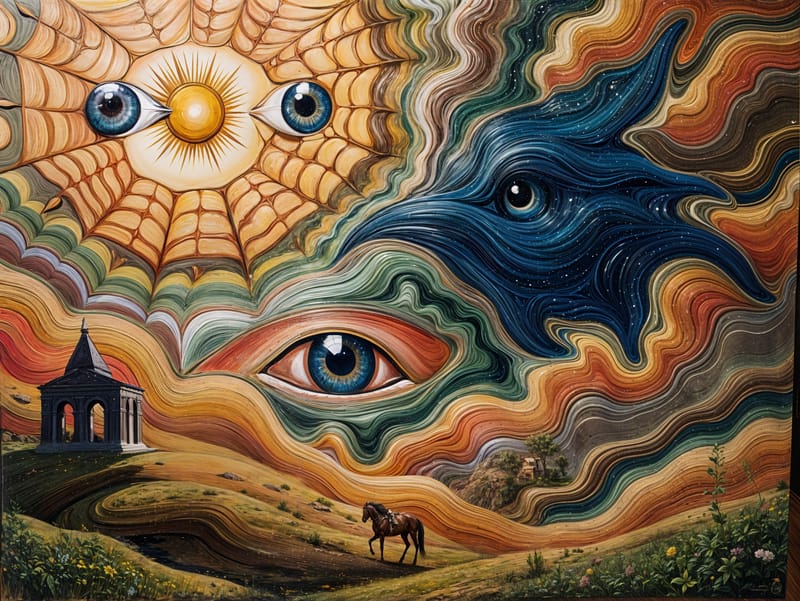
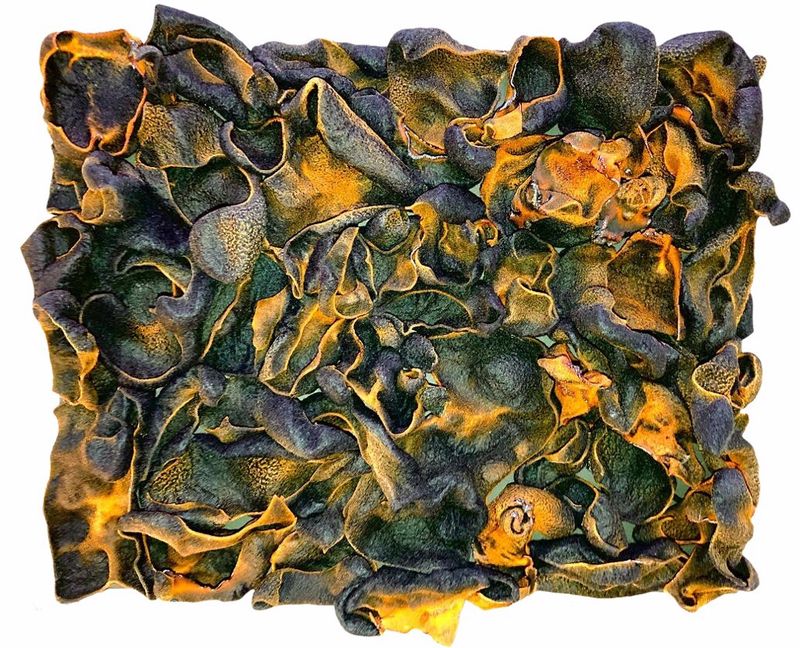
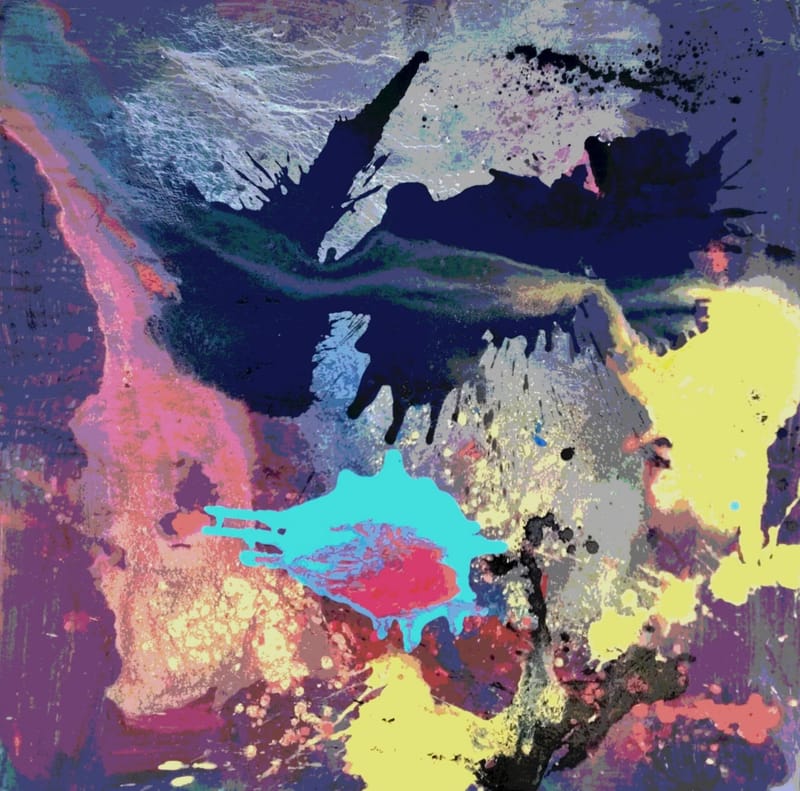
Artist Ramutė Paulikaitė lives and works in Skuodas, Lithuania. R. Paulikaitė studied at Pr. Žadeikis Gymnasium in Skuodas. In 1999, she graduated from Telšiai Higher School of Applied Arts, the current branch of the Lithuanian Academy of Arts, and obtained the specialty of a master of knitwear artistic construction and modeling. In 1999, she began working as an art and technology teacher, as well as a group leader, at Aleksandrijas Primary School. The artist organizes personal exhibitions in Lithuania, and has been participating in international projects since 2000. She has participated in international projects in Kaunas, Latvia, Indonesia, the Philippines, India and other countries. In 2007, she graduated from Šiauliai University in art and design, obtaining a bachelor's degree and teacher qualification. The artist has dedicated a significant part of her life to the education of young people and adults at the King Mindaugas Vocational Training Center in Kaunas.R.Paulikaitė's artistic creative path began in childhood. She became interested in the art of painting early, and a little later in the art of experimental photography. R. Paulikaitė's abstract painting and experimental photographic landscapes are inscribed in the context of Lithuanian art, and have also found exceptional positions in international projects. In terms of genre, in the field of painting, these are abstract landscapes, and in the field of photography, these are experimental, expressive landscapes. Different themes dominate R. Paulikaitė's artistic work: themes prevailing between good and evil, the search for different worlds, an important connection with the UNIVERSE. In both the landscapes of painting and the landscapes of experimental photography, conceptuality, the search for themes, the diversity of the color palette, expression and dynamics between the variety of painterly strokes and pixels on one or even several canvases are extremely important. In both areas of the artist's work, there is a variety of thematic stories. Topics such as: “Infinity 12”, “Apocalypse”, “Does oil flow easily?”, “Transformation”, “Brush Country”, “Colored Message” and other various topics relevant in today’s art world dominate. Ramutė Paulikaitė’s experimental photography features extremely important themes, from natural landscapes to architecture, lines and shapes are important in artistic compositions. The author’s experimental photographs intertwine diverse natural motifs or abstract landscape motifs. The solution of conceptual ideas and forms, their search, is very important. The author’s work combines photography and painting as an artistic dialogue. Expressive and dynamic color strokes, artistic composition solutions in photographic abstractions are extremely important. Ramutė Paulikaitė is an actively creating Lithuanian artist in the fields of abstract painting and experimental photography. The author’s work is characterized by subtle aesthetics, emotional depth, consistency, interest in the inner world of man and an important relationship with the Universe. Artistic interpretations are extremely important in each area of the author’s work. Her work is characterized by attention to detail, the play of light and shadow, the main features of painting: a subtle atmosphere, a tendency towards minimal and expressive abstraction, in her abstract painting she explores the relationship between the viewer and the work, not only through the plot, but also through important experiences. In the international art magazine “Contrasts” the artist presents five paintings and five photographic works from the following cycles: “In the nature rythme ”, “Thread of time”, “Monograme”. The work of the artist Ramutė Paulikaitė is dominated by unconventional abstract nature scenes-landscapes. In each work there is a lot of light, in some works a detail of darkness appears and a fragment of mystery remains. In some of the author’s works there are architectural details.Art critic Gabrielė Kuizinaitė
Antonius Kho Indonesia
07/015/2025 Artist Antonius Kho's journey of colors between Indonesia and the world. Famous artist Anthonius Kho initially learned from well knownIndonesian artist Barli. When he was graduaeted the Academy of Fine Artin Bandung in Indonesia in 1982 years, he went to study in the Academyof Fine Art in Cologne, Germany, majoring glass painting and textile arts,after wich he went to Master School of Art where he was under thesupervision of Prof. Schaffmeister & M. Brinkhaus and finished hisstudies in 1991. In 1989 years he won the 1 st prize at the competition“Malen auf Liegestuehlen” Olivandenhof in Cologne, in Germany. In1998 years he again won the 1 st prize of “Mask in Venice”, ArtAddiction Annual in Venice, Italy. With this overseas art experiences,from 1984 years to 2020 yars, he do in total 33 solo exhibitions inIndonesia, India, Germany, Netherlands, France, Finland, USA, Vietnam,Vietnam, South Korea and China, and from 2005 to 2020 he wasparticipated in totally 114 group exhibitions held all over the worldincluding Indonesia, Malaysia, South Korea, UAE, USA, Canada, Egypt,Equador, Argentina, Panama, Peru, Mexico, Uruguay, Myanmar, China,Macau, Singapore, Taiwan, Thailand, Philippines, Cambodia, Vietnam,Bangladesh, Bhutan, India and Nepal, in the international Art Baselproject and in Saatchi gallery in London. It is not surprising that hisartworks have already been collected all over the world by republicmuseums, galleries and arts foundations as also by private collectors.Anthonius himself is also a very active player in the art scene as thefrequently organizes art exchange projects among artists.He is a well-known artist as a representative of bright colors andexpressive figurative style. His works combine Asian symbolism and theart of abstract expressionism. He often presents human figures or masksin various formats of paintings, which is the main feature of his style.Masks depict human social purpose and emotions. The dominant themesin his paintings are the search for identities and cultural diversity, whichis most revealed. A bright color palette dominates each work of theauthor of the painting. The main symbol of his work is the mask.Antonius’ paintings contain a high level of complexity that attract artcritics’ attentions. Originated from Chinese parents, Antonius was born inmiddle of Java, Indonesia. Figures of the Wayang puppet shows andpatterns of the batik designs, as well as human figures he observes indaily life provide huge source of images reproduced on his paintings in away that the original meanings of these cultural elements no longer exist;instead such folkloric emblems, mostly appear as masks, turn into justvisual symbols arranged in collages, mosaic and cubism-like patterns
which were also read by art critics as a representation of modernity andabstraction. One can also identify that “eye” lurks everywhere in hispaintings where according to Antonius, “they are the ultimate presence oftruth” he’s depicting, which shows his internal wish for observing peopleand life. With his background influenced both by east and west cultures,Antonius’ paintings are showing such tensions as well as thereconciliation between them. They are also complex or even chaoticrendering of unstable beings or figures that were drawn by interlockinglines and arranged in multiplicity of perspective, which may reflect thestate of his mind as a result of his rich life experiences ranging fromobserving humanity in daily life to having critical attitudes of socialphenomena based on both his east and west cultural exposures.Antonius is using mainly mix media of paper, rag & jute in his paintings.And nature plays a main role in his use of colour where earthy or yellowtone are commonly seen in his artworks.As Antonius likes observing people, “people” becomes the main subjectof his paintings. During the pandemic in 2022, while maintaining hisbasic styles, he further created a series of individual human figures invivid white colour to symbolize human’s innocence, honesty andauthenticity.In the international arts magazine “Contrasts” Anthonius presesnts thesedifferents artworks: “Wellcome”, Old angel”, “Tonguelless tongue”,“Labubu”, Prayer”, Healthy baby”. “Tonguellss tongue”, “Labubu”,“Prayer”, “Healthy baby”