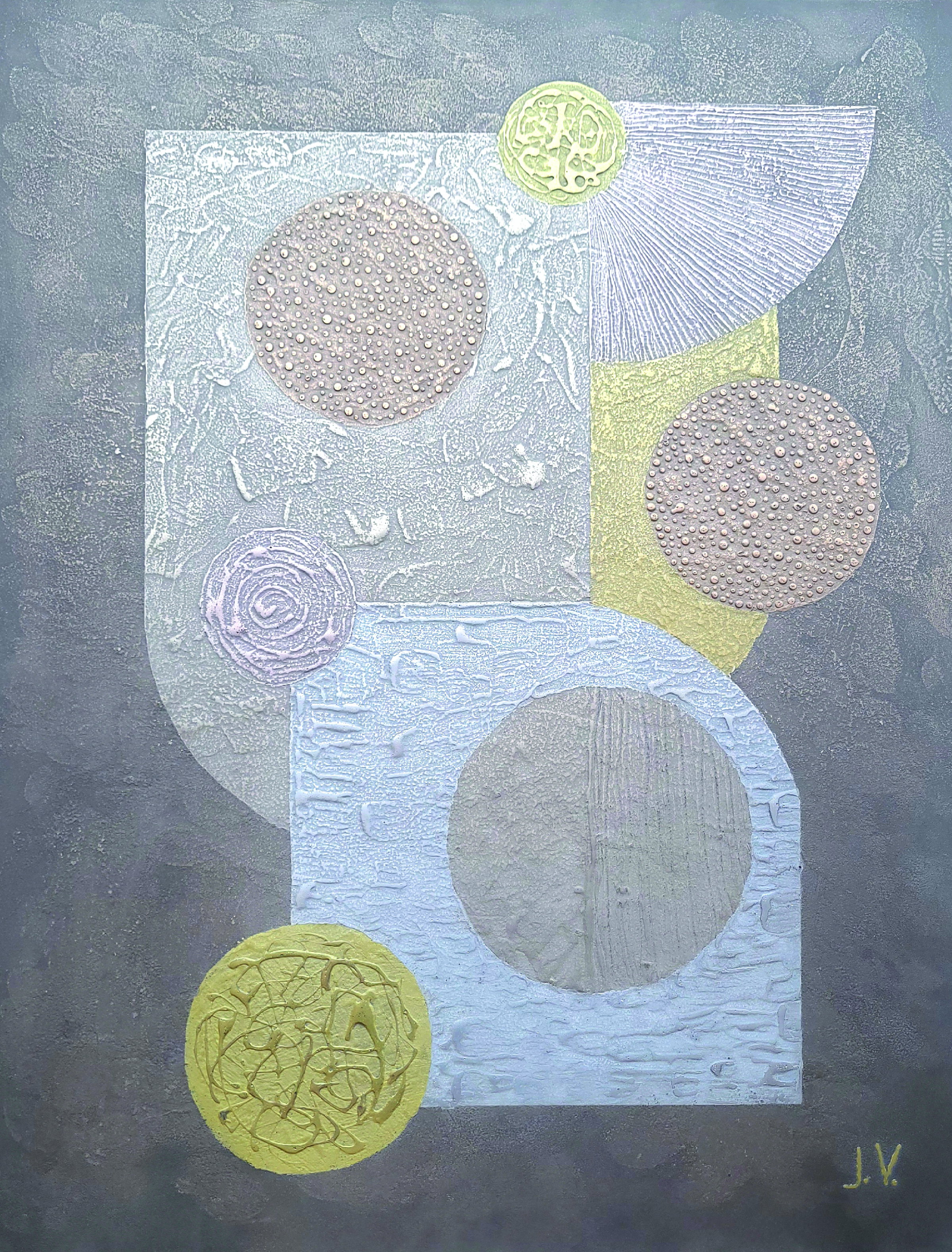
Between industry and the artistic visions of metal painter Jurgita Baleišė
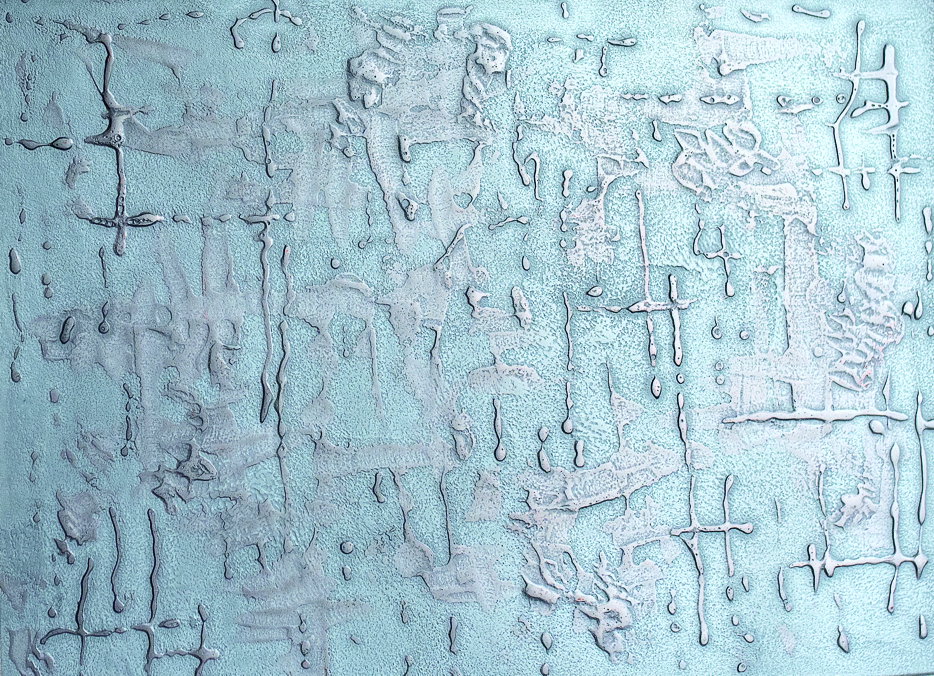
Between industry and the artistic visions of metal painter Jurgita Baleišė Artist Jurgita Baleišė lives and works in Kaunas, Lithuania.Although the author’s creative journey began recently, creativity has always been a part of the author’s life. In 2003, she graduated from Kaunas College, majoring in printing and books, and spent the next decade working in advertising and book publishing. In 2024, she completed a course in liquid metal and epoxy resin surface decoration at the Vilnius Construction Training Center. This was the beginning of the author’s artistic path. Today, the author’s journey is a journey through the world of liquid metal, where every stroke becomes a texture and tells its own story. Using this technique, the author creates works in which natural materials merge with abstract expression. In the author’s paintings, metal not only shines and reflects light - it breathes, flows, forms organic patterns and shapes. In recent years, the artist has participated in international art festivals in Kaunas, presented several of her works at an international exhibition in Rome, and her works are beginning to be published in international books. Currently, the exhibition participant is continuing her studies in interior design at the Kaunas School of Art and Design. She has already participated in international Art Kaunas visual arts festivals, international exhibitions in Italy and Serbia. Her artistic metal paintings are published in the upcoming German art book “CATHARSIS 2026”.Jurgita Baleišė's creative space pulsates between cold metal and breathing industry - a place where material loses its rigor, and form becomes alive, almost organic. Her paintings do not so much depict the world as they reconstruct it: dismantled, remelted, remelted into new, unexpected structures.In the works of artist Jurgita Baleišė, metal is not just a surface or a decorative detail – it becomes a language. This language speaks of time, of the scars left by industry and of man’s relationship with what he himself has created. Sometimes her compositions resemble rusted structures, sometimes futuristic cities still waiting for their inhabitants. However, the tension between strict geometric logic and spontaneous, almost chaotic gesturality is felt everywhere.In Baleišė’s visions, industry is not just a noisy, mechanical force. It is like a living organism, breathing through pipelines, beating through rhythmic lines, quietly radiating heat through oxidized surfaces. This life often appears through color: unexpectedly intervening warm tones that penetrate the cold metal body like blood.The layering of time is also felt in her work. Each surface seems to have a history – as if it has been recycled many times, scraped off, and covered again with a new layer. It reminds us of the city walls, where different eras, different ideologies, different traces of people intersect. In this way, the painting becomes not a static object, but a process – a constant transformation.Interestingly, when looking at these works, the viewer himself becomes a part of the industrial system. The eye travels through lines, connections, fractures, as if following an invisible mechanism. However, this “mechanism” never fully reveals itself – it leaves room for interpretation, feeling, personal experience.The following accents are important in the works of the artist Jurgita Baleišė: light and the aesthetics of reflection, abstraction and non-figurativeness, reflections of materials and textures.Perhaps this is where the strength of Baleišė’s work lies: she does not seek to define industry or metal as unambiguous symbolism. Instead, she invites you to experience – to feel their weight, their temperature, their silent but persistent presence. Between industry and metal, not only forms are born in her paintings, but also questions: about man, about time, about what remains when everything seems to have already been created.Art critic Gabrielė Kuizinaitė