The Worlds of Nature and Animal Art in the Graphic Works of Serena Pečiūnaitytė
The Worlds of Nature and Animal Art in the Graphic Works of Serena Pečiūnaitytė
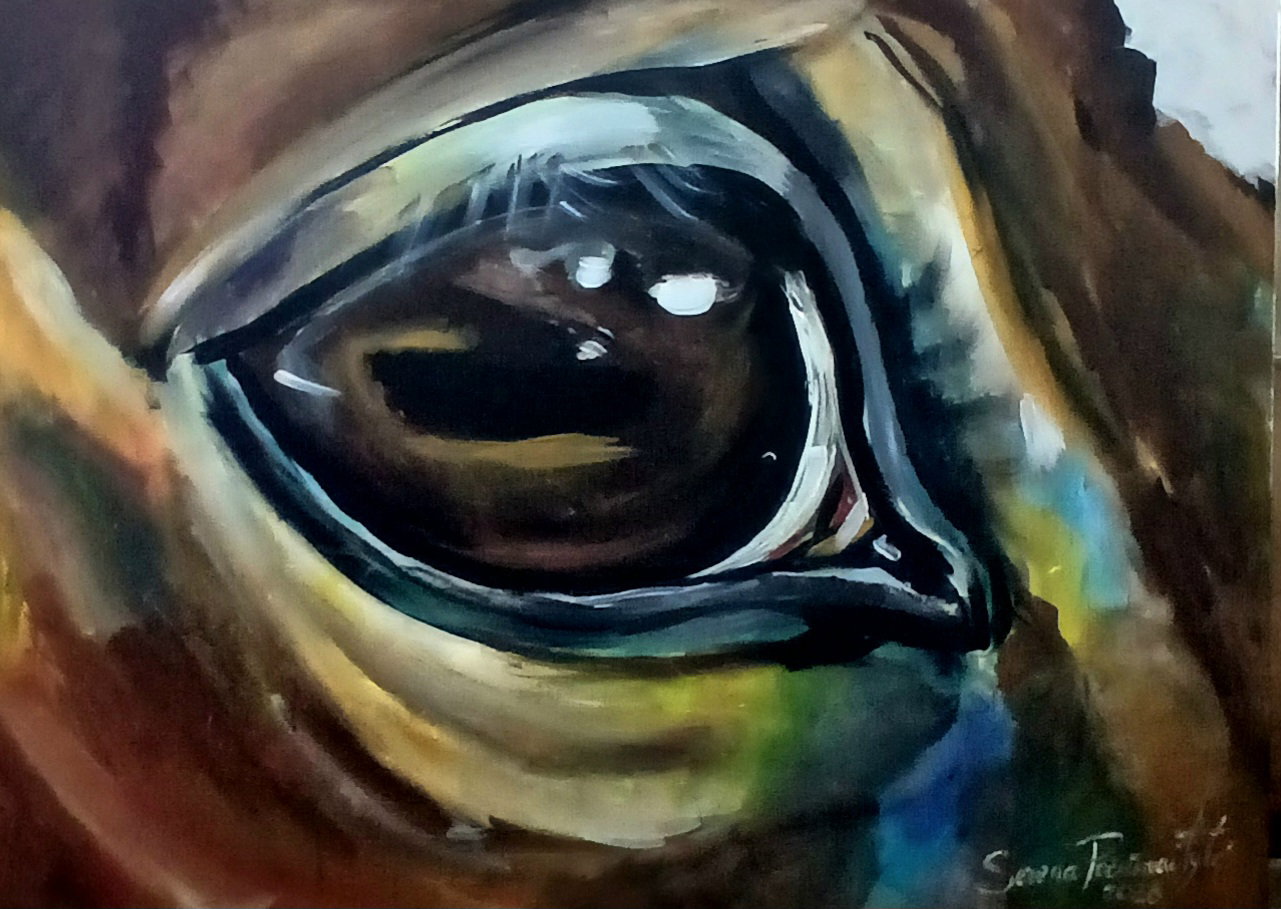
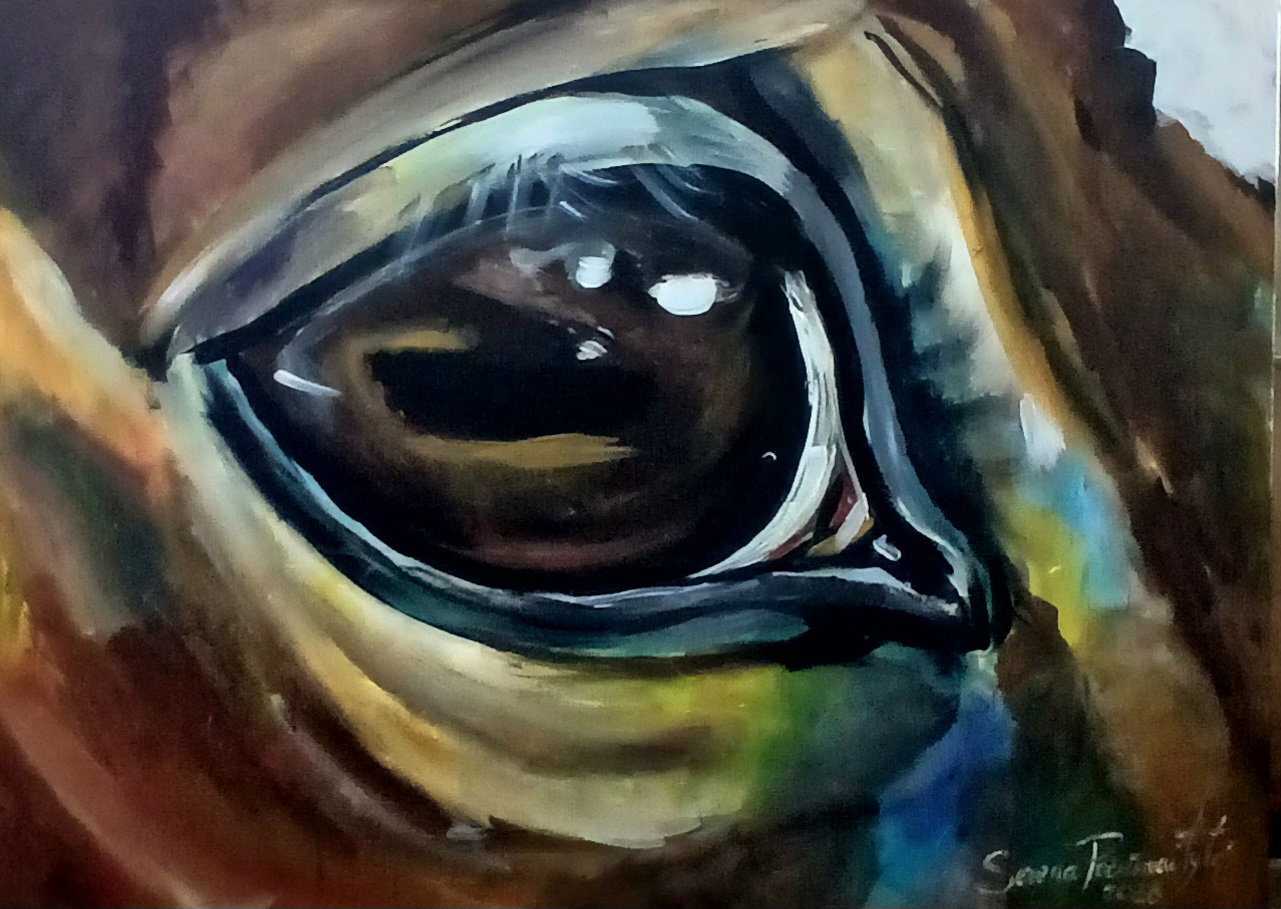
Graphic artist and painter Serena Pečiūnaitytė lives and works in Kaunas, Lithuania. In 1999, she graduated from the Vilnius Academy of Arts with a Bachelor's degree in Graphic Arts (Printmaking), and in 2001 she received a Master's degree in Printmaking from the same institution. In 2012, she continued her studies at the Lithuanian University of Educational Sciences, and in 2013 she was awarded the professional qualification of Senior Art Teacher (Methodologist). Since 2020, she has been a member of the Graphic Arts Section of the Lithuanian Artists' Association.Serena Pečiūnaitytė is a printmaker whose artistic practice is devoted to animal imagery. Her visual universe brings together horses, turtles, goats, devils, chickens, and many other creatures, creating a distinctive rural world deeply rooted in nature. Her works have been exhibited internationally in Japan, Indonesia, the Philippines, India, Italy, Greece, Slovenia, Serbia, Poland, and numerous other countries.The artist is deeply fascinated by the animal kingdom, which she approaches with affection, curiosity, and profound respect. She interprets animals through her own imaginative vision, transforming them into symbolic and psychological beings. Within the context of Lithuanian contemporary art, she represents a rare type of artist who consciously defines herself as an animal artist. Throughout her career, she has consistently developed this unique artistic direction within the traditions of classical Lithuanian printmaking and monumental drawing.Continuing this uncommon artistic tradition, Pečiūnaitytė cultivates invaluable qualities such as sensitivity toward nature, careful observation of the environment, and the ability to capture its subtle nuances. These values are embodied through classical printmaking techniques, particularly linocut and drypoint engraving.In her work, the animal is far more than a representative of the zoological world. It becomes a metaphor for human existence, an allegory of emotions, experiences, and psychological states. The anatomy of mammals and reptiles is transformed into an expressive language of existential reflection, satire, and tragicomedy. This approach constitutes one of the most distinctive features of the artist's oeuvre within the broader context of Lithuanian graphic art.Serena Pečiūnaitytė is a versatile artist whose creative practice extends beyond printmaking and drawing. She has painted large-scale murals, including those at the "Deadtown" Adventure Park, featuring animal characters, horror aesthetics, and references to iconic figures from mystical and horror cinema. Her murals also decorate kindergartens such as Boružėlių pieva and Šermukšnėlis, where she creates playful animated characters suited to children's environments.Her artistic language is closely intertwined with the visual worlds of cinema and animation. Her prints are restrained yet refined, balancing between symbol, sign, and image while simultaneously infused with the atmosphere of horror films, elements of Baltic mythology, and a transcendent reality that belongs uniquely to the artist's imagination.Pečiūnaitytė possesses an innate affinity for animal imagery and an exceptionally original artistic vision. She presents animals not merely as portraits but as psychological enigmas—hybrid beings that merge human and animal characteristics. In doing so, she confronts viewers with mysterious, irrational phenomena that resist explanation yet remain intuitively recognizable. Her compositions are dominated by unusual, often absurdly compelling multi-figure animal scenes. These works have earned recognition not only within Lithuania but also internationally for their rare and highly distinctive exploration of animal imagery intertwined with anthropomorphic, transcendental, mythological, and hauntingly rural worlds.Within the field of contemporary Lithuanian printmaking, Serena Pečiūnaitytė stands out through her consistent exploration of animal themes, which evolve into a comprehensive artistic worldview rather than functioning merely as iconographic motifs.Within the field of contemporary Lithuanian printmaking, Serena Pečiūnaitytė stands out through her consistent exploration of animal themes, which evolve into a comprehensive artistic worldview rather than functioning merely as iconographic motifs.In the artist's prints, drawings, and illustrations, animals cease to be representations of biological reality. Instead, they are transformed into symbolic, archetypal, and psychological images that reflect the complexity of human inner life. Nature itself acquires a metaphysical dimension where reality merges with mythology, folklore, surreal imagination, and existential human experience.Pečiūnaitytė's artistic language is firmly rooted in the traditions of classical printmaking. She demonstrates remarkable mastery of drypoint, drawing, and other printmaking techniques, while line becomes the principal element of her visual expression. Dynamic, expressive, and highly precise, her lines shape forms, construct textures, and communicate emotional intensity.Pečiūnaitytė's artistic language is firmly rooted in the traditions of classical printmaking. She demonstrates remarkable mastery of drypoint, drawing, and other printmaking techniques, while line becomes the principal element of her visual expression. Dynamic, expressive, and highly precise, her lines shape forms, construct textures, and communicate emotional intensity. The contrast between black and white reinforces the dramatic quality of her compositions, emphasizing structural relationships between forms and symbols. Thus, printmaking techniques become not merely technical choices but conceptual strategies of artistic expression.Animal imagery in Pečiūnaitytė's work assumes multiple layers of meaning. The depicted creatures are not zoologically accurate representations; rather, they are anthropomorphized, grotesquely transformed, or merged with human and mythological features. Through this iconographic transformation, the animal becomes a metaphor for human emotions, social relationships, moral dilemmas, and existential conditions. This symbolic language bears affinities with Surrealism, where dream imagery and subconscious transformations challenge rational perceptions of reality.An important aspect of the artist's work is her interpretation of Lithuanian folklore and Baltic mythology. In series such as Devil from Nature, mythological figures lose their traditional frightening appearance and acquire distinctly animal characteristics. Here, the devil is no longer an embodiment of absolute evil but becomes part of nature itself—a playful, ironic, and sometimes even empathetic character. Such reinterpretations reveal the artist's dialogue with Lithuanian legends, fairy tales, and folk imagination, where human and animal worlds coexist within a unified cosmic order. Through this mythopoetic vision, Pečiūnaitytė constructs a unique iconographic system in which archetypal imagery merges with contemporary reflections on human identity.Her compositions frequently center around a single dominant figure whose psychological intensity is heightened by a neutral background. This compositional strategy directs the viewer's attention toward the figure's gaze, bodily distortions, textural subtleties, and symbolic details. Aesthetic tension emerges from the interaction between naturalistic drawing, fantastic transformation, horror aesthetics, and the mystery of myth.Grotesque aesthetics constitute another defining principle of Pečiūnaitytė's work. The artist is also a well-known caricaturist whose satirical works have appeared in numerous caricature exhibitions and catalogues. Here, the grotesque is not merely humorous but becomes a vehicle for philosophical reflection. Through irony and tragicomedy, she explores family relationships, social stereotypes, human weaknesses, loneliness, and the contradictions of contemporary society.Her hybrid creatures—half human, half animal—visualize liminal states between culture and nature, consciousness and instinct, civilization and the primordial world, as well as between the visible world and the dark, mythical realm of transcendence.These images encourage viewers to reconsider anthropocentric models of the world and to reflect upon humanity's relationship with living nature, mythology, personal experience, and the mystical heritage of the ancient Balts. Pečiūnaitytė's works do not seek to answer questions such as "What is this?" or "Why is it so?" They simply exist in their own enigmatic reality. This field of thought, experienced through the artist's creative expression, becomes a transcendent reality where past, present, and future coexist.Art critic Gabrielė Kuizinaitė